
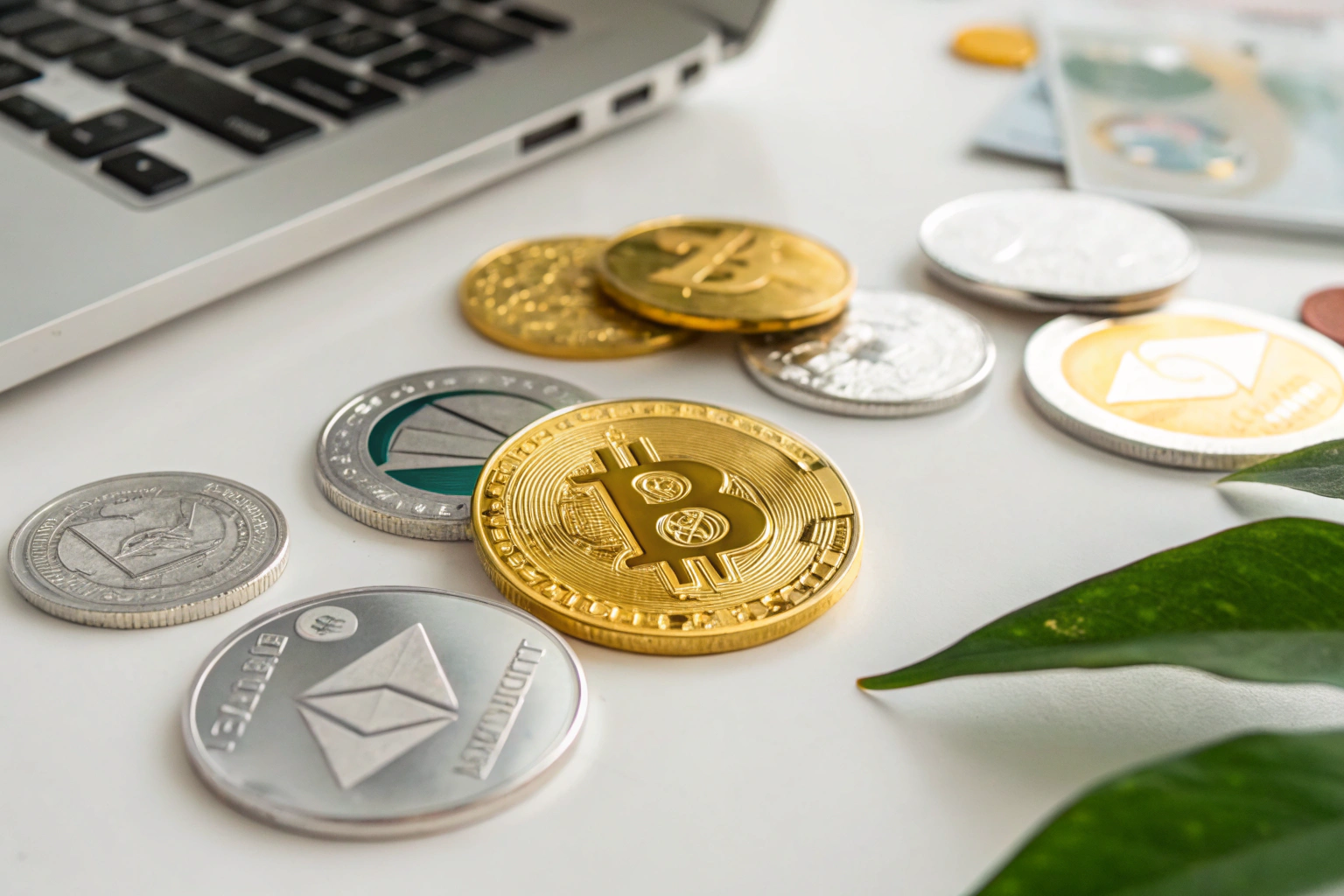
Long-term crypto investors face a fundamental dilemma: should they stick to the relative safety of Bitcoin and Ethereum, or venture into the potentially lucrative but risky world of altcoins? This question becomes increasingly complex when considering investment horizons spanning 5-10+ years, where the stakes of portfolio decisions compound dramatically over time.
Altcoins—any cryptocurrency other than Bitcoin—represent thousands of digital assets ranging from established platforms like Solana to emerging DeFi tokens and experimental protocols. While Bitcoin has demonstrated remarkable resilience and Ethereum has carved out its niche as the leading smart contract platform, altcoins promise innovation, utility, and potentially outsized returns. However, they also carry substantially higher failure rates, with many projects disappearing entirely within their first few years. For risk-aware investors planning for the long term, the decision requires a data-informed approach that weighs both the mathematical realities of altcoin performance and the portfolio construction principles that have guided successful investing for decades.
How Long-Term Investors Should Think About Altcoins
When evaluating altcoins through the lens of portfolio theory, long-term investors must consider how these assets fit within the broader risk-return spectrum. Traditional portfolio construction emphasizes diversification benefits, but crypto markets often move in correlation during major cycles, potentially limiting the diversification benefits that altcoins might provide.
The core question isn’t whether altcoins can generate higher returns—many demonstrably can during favorable market conditions. Instead, the focus should be on whether the risk-adjusted returns of altcoins align with long-term investment mandates, particularly when factoring in the higher probability of total loss and the psychological toll of managing highly volatile positions over extended periods.
Risk-adjusted thinking also requires acknowledging that long-term investing in crypto operates in a fundamentally different environment than traditional assets. Regulatory uncertainty, technological obsolescence, and competitive displacement create additional layers of risk that don’t exist in established asset classes.
| Aspect | Bitcoin / Major Assets | Altcoins | Implication for Long-Term Investors |
|---|---|---|---|
| Survival Probability | Very High (established track record) | Variable (many fail within 2-3 years) | Requires careful selection and monitoring |
| Volatility | High but predictable patterns | Extreme and unpredictable | Position sizing becomes critical |
| Liquidity | Deep markets, institutional access | Often shallow, retail-dependent | Exit strategies must be planned in advance |
| Regulatory Risk | Increasing clarity and acceptance | High uncertainty, potential bans | Diversification across jurisdictions may help |
| Upside Potential | Significant but likely more moderate | Potentially exponential for winners | Small allocations can have portfolio impact |
Defining Long-Term Investing in Crypto
Long-term crypto investing typically means holding positions for 5-10+ years, weathering multiple market cycles while focusing on fundamental value creation rather than short-term price movements. This approach requires a shift from trading mentality to ownership mentality, where investors evaluate projects based on their potential to solve real-world problems and capture sustainable market share over time.
The emphasis on risk-adjusted returns becomes paramount in long-term crypto investing. While a day trader might accept extreme volatility for the chance of quick gains, long-term investors must consider whether they can psychologically and financially withstand the inevitable drawdowns that come with altcoin exposure. Historical data shows that even successful altcoins can experience 80-95% drawdowns during bear markets, and recovery is never guaranteed.
Fundamentals-focused analysis also distinguishes long-term crypto investing from speculative trading. This means evaluating team quality, technology adoption, competitive positioning, and economic sustainability rather than chart patterns or social media sentiment.
What Counts as an Altcoin for This Discussion?
For portfolio construction purposes, altcoins can be categorized into several risk tiers. Large-cap altcoins like Solana, Cardano, or Polygon represent established projects with significant market capitalization, institutional recognition, and proven resilience through at least one major market cycle. These carry lower risk than smaller alternatives but still substantially higher risk than Bitcoin or Ethereum.
Mid-cap and small-cap altcoins encompass projects with market capitalizations ranging from hundreds of millions to a few billion dollars. These often represent innovative protocols, DeFi platforms, or sector-specific solutions that have gained traction but remain unproven over multiple cycles. The risk-reward profile here becomes more extreme, with higher potential returns balanced against significantly higher failure rates.
Emerging tokens and experimental protocols represent the highest-risk category, often including new launches, governance tokens, and speculative plays on future trends. While these can deliver extraordinary returns in favorable conditions, they also carry the highest probability of total loss and should generally represent only the smallest portion of any long-term portfolio.
Core Risks of Altcoins for Long-Term Holders
The structural risks facing altcoin investors extend far beyond normal market volatility. Unlike traditional assets where companies might decline gradually, crypto projects can face sudden existential threats that eliminate their value entirely within days or weeks. Understanding these risks is essential for any long-term investor considering altcoin exposure.
Historical data paints a sobering picture: studies suggest that over 80% of altcoins launched in previous cycles have lost more than 90% of their peak value, with many becoming completely worthless. This isn’t merely a function of bear markets—many projects fail to adapt to changing technology, lose developer support, or become victims of exploit or mismanagement.
The compounding effect of these risks over long time horizons means that even small probabilities of total loss can significantly impact expected returns when projected across 5-10 year periods. This mathematical reality forms the foundation for why position sizing and diversification become so critical in altcoin investing.
- Smart Contract and Protocol Risk: Bugs, exploits, and technical vulnerabilities can drain project treasuries or render tokens worthless overnight, with limited recourse for investors
- Regulatory Crackdowns: Government actions can effectively ban or severely restrict altcoins, particularly those classified as unregistered securities or privacy coins
- Rug Pulls and Exit Scams: Fraudulent projects designed to steal investor funds remain common, especially among newer or anonymous teams
- Technology Obsolescence: Rapid innovation means today’s cutting-edge protocols can become outdated within 2-3 years, losing their competitive advantage
- Liquidity Death Spirals: As projects lose attention or face problems, trading volumes can collapse, making it impossible to exit positions at reasonable prices
- Team and Governance Failures: Founder departures, internal conflicts, or poor strategic decisions can destroy project value even when the underlying technology remains sound
Why Altcoin Risk Is Structurally Higher Than Bitcoin
Bitcoin’s risk profile benefits from powerful network effects that create defensive moats around its value proposition. As the first and most recognized cryptocurrency, Bitcoin has achieved a level of institutional adoption, regulatory clarity, and cultural acceptance that creates substantial barriers to displacement. Its role as “digital gold” provides a clear, understandable value proposition that doesn’t depend on complex technical implementations or competitive positioning.
Ethereum, while carrying higher risk than Bitcoin, benefits from similar network effects within the smart contract ecosystem. Its established developer community, extensive tooling, and first-mover advantage in DeFi and NFTs create switching costs that help defend against newer competitors. The transition to proof-of-stake has also addressed many environmental and scalability concerns that previously threatened its long-term viability.
Altcoins, by contrast, typically face intense competitive pressure and must continuously innovate to maintain relevance. They often depend on small teams, lack institutional support, and operate in rapidly evolving technological landscapes where today’s advantage can quickly become tomorrow’s liability. This creates an inherently higher baseline risk that even the most promising projects must overcome to achieve long-term success.
Potential Rewards: What Altcoins Can Offer That Bitcoin Cannot
Despite their risks, altcoins offer unique value propositions that Bitcoin and Ethereum cannot match. Many represent focused solutions to specific problems, from cross-border payments to decentralized storage, that could capture substantial market share if successfully executed. The key insight for long-term investors is that small allocations to the right altcoins can have outsized portfolio impacts if they achieve mainstream adoption.
The innovation cycle in crypto moves remarkably quickly, creating opportunities for new projects to establish dominant positions in emerging sectors. While Bitcoin and Ethereum provide foundational infrastructure, altcoins often pioneer new use cases, user experiences, and business models that can eventually command significant value if they prove sustainable and scalable.
| Altcoin Use Case | Example Type | Unique Value Proposition | Upside Scenario for Long-Term Investors |
|---|---|---|---|
| Layer 1 Blockchains | Solana, Avalanche | Higher throughput, lower costs than Ethereum | Capture significant DeFi and gaming market share |
| Cross-Chain Infrastructure | Polkadot, Cosmos | Enable interoperability between blockchains | Become critical infrastructure as multi-chain future unfolds |
| Decentralized Storage | Filecoin, Arweave | Permanent, censorship-resistant data storage | Disrupt cloud storage industry worth hundreds of billions |
| Privacy Coins | Monero, Zcash | True financial privacy and fungibility | Serve markets where privacy is essential despite regulatory headwinds |
| Oracle Networks | Chainlink, Band Protocol | Reliable external data feeds for smart contracts | Essential infrastructure as DeFi and prediction markets scale |
| Gaming and Metaverse | Axie Infinity, Decentraland | Play-to-earn mechanics and virtual asset ownership | Tap into massive gaming industry with new economic models |
Innovation, Network Effects, and Altcoin Winner Dynamics
Multi-cycle winners in the altcoin space typically share certain characteristics: they solve genuine problems, build strong developer ecosystems, and achieve network effects that create defensive moats. However, identifying these winners prospectively remains extraordinarily difficult, as success often depends on factors like timing, execution quality, and market conditions that are hard to predict years in advance.
The winner-take-most dynamics common in technology sectors apply strongly to crypto, meaning that successful altcoins can capture disproportionate value within their niches. A protocol that becomes the standard for cross-chain communication or the dominant platform for a specific use case can justify valuations that seem extreme during early stages but reasonable in retrospect.
This dynamic creates the mathematical foundation for altcoin investing: while most projects fail, the winners can generate returns large enough to compensate for multiple failures within a diversified portfolio. The challenge lies in building sufficient diversification while maintaining position sizes large enough to matter when winners emerge.
Why Upside Alone Is Not a Sufficient Justification
Survivorship bias heavily distorts perceptions of altcoin returns, as media coverage and investor attention naturally focus on success stories rather than the thousands of projects that quietly fail. This creates a systematic overestimation of the expected returns from altcoin investing, particularly when investors extrapolate from short-term gains during favorable market conditions.
Risk-adjusted return analysis must account for the probability-weighted outcomes across all possible scenarios, including total loss. When factoring in realistic failure rates and the time value of money over long investment horizons, the expected returns from altcoin investing often look far less attractive than headline-grabbing success stories might suggest.
The concept of utility maximization from behavioral finance also applies here: for most long-term investors, the marginal utility gained from potentially higher returns must be weighed against the marginal disutility from increased risk and complexity. This calculation varies significantly based on individual financial situations, risk tolerance, and investment objectives.
Altcoins vs Bitcoin and Ethereum in a Long-Term Portfolio
Portfolio construction for long-term crypto investing should follow a tiered approach based on risk and conviction levels. Bitcoin typically serves as the foundation due to its established track record, institutional adoption, and role as a store of value. Ethereum occupies the middle tier as the dominant smart contract platform with proven utility but higher technical and competitive risks than Bitcoin.
Altcoins, when included, should generally occupy the highest-risk tier of a crypto allocation, sized according to their speculative nature and the investor’s ability to tolerate potential total losses. The key insight is that even small altcoin allocations can provide meaningful diversification benefits and upside exposure without compromising the overall portfolio’s risk profile.
This tiered approach also facilitates disciplined rebalancing, as gains in higher-risk positions can be systematically harvested and reinvested in more conservative crypto assets or traditional investments, maintaining appropriate risk levels as portfolios grow.
- Bitcoin Foundation (50-70% of crypto allocation): Provides stability, institutional recognition, and defensive characteristics within the crypto portfolio
- Ethereum Core Holding (20-35% of crypto allocation): Offers exposure to smart contract innovation and DeFi growth while maintaining reasonable risk levels
- Large-Cap Altcoins (5-15% of crypto allocation): Established projects with multi-cycle track records that offer specific technological or market advantages
- Speculative Altcoins (0-10% of crypto allocation): High-risk, high-reward positions in emerging protocols or innovative projects with unproven long-term viability
- Regular Rebalancing Schedule: Quarterly or semi-annual rebalancing to maintain target allocations and harvest gains from outperforming positions
Blue-Chip Altcoins: A Possible Middle Ground?
Large-cap altcoins like Solana, Cardano, or Binance Coin represent a potential middle ground between the relative safety of Bitcoin/Ethereum and the extreme risk of smaller altcoins. These projects have survived multiple market cycles, built substantial ecosystems, and achieved significant institutional recognition, suggesting some durability in their value propositions.
However, even blue-chip altcoins carry substantially higher risk than Bitcoin or Ethereum. They face ongoing competitive pressure, depend more heavily on specific teams or foundations, and often have more complex technical implementations that could suffer from bugs or architectural limitations. Their higher market caps also mean that explosive growth potential is more limited compared to smaller, earlier-stage projects.
The case for blue-chip altcoins strengthens for investors who want broader crypto exposure without the extreme volatility and research requirements of smaller altcoins. They offer a reasonable compromise between risk management and diversification, though they should still be sized as speculative positions rather than core holdings in most long-term portfolios.
Key Scenarios Where Long-Term Investors Might Avoid Altcoins Entirely
Certain investor profiles and circumstances make a strong case for avoiding altcoins altogether, focusing instead on Bitcoin and possibly Ethereum. These scenarios often involve either limited risk tolerance, insufficient time for research and monitoring, or specific financial goals that prioritize capital preservation over maximum growth potential.
The decision to avoid altcoins entirely can be perfectly rational for investors who recognize their limitations in terms of research capability, emotional tolerance for volatility, or simply prefer the simplicity of a more concentrated approach. There’s no requirement that every portfolio include altcoin exposure to be successful over long time horizons.
| Investor Profile | Primary Goal | Case for Avoiding Altcoins | Potential Opportunity Cost |
|---|---|---|---|
| Conservative Retirees | Capital preservation with modest growth | Cannot afford total loss of any position | Missing exponential gains from successful altcoins |
| Time-Constrained Professionals | Simple, passive investment approach | Lack time for proper due diligence and monitoring | Potentially higher returns from careful altcoin selection |
| Risk-Averse Savers | Hedge against inflation and currency debasement | Bitcoin serves this purpose with lower complexity | Diversification benefits and technological innovation exposure |
| Institutional Fiduciaries | Meeting fiduciary duties and compliance | Regulatory uncertainty and difficulty explaining altcoin choices | Enhanced returns and broader crypto ecosystem exposure |
| Crypto Beginners | Learning crypto investing fundamentals | Avoiding complexity while building experience | Education through exposure to diverse projects and technologies |
When ‘Bitcoin-Only’ (or Bitcoin + Ethereum) Is Rational
A Bitcoin-only or Bitcoin-plus-Ethereum approach offers several compelling advantages for long-term investors. These assets have achieved regulatory clarity in most jurisdictions, trade on regulated exchanges with deep liquidity, and have established clear value propositions that don’t require constant reevaluation. This simplicity can be particularly valuable for investors who view crypto as one component of a broader diversified portfolio.
The operational benefits of focusing on major cryptocurrencies include easier tax reporting, reduced research requirements, and lower monitoring overhead. Investors can implement dollar-cost averaging strategies or other systematic approaches without the complexity of managing multiple altcoin positions, each requiring individual evaluation and management decisions.
From a risk management perspective, Bitcoin and Ethereum also offer more predictable correlation patterns with traditional assets and clearer responses to macroeconomic factors. This predictability, while not eliminating volatility, does make portfolio planning and stress testing more reliable over long time horizons.
Psychological and Behavioral Risks of Holding Altcoins Long-Term
The psychological challenges of altcoin investing often prove more difficult than the financial risks. Altcoins frequently experience extreme volatility that can trigger emotional decision-making, leading investors to buy during hype cycles and sell during panics. These behavioral biases can completely undermine long-term investment strategies, even when the underlying project selection is sound.
FOMO (fear of missing out) represents a particular risk in altcoin investing, as social media and crypto communities constantly promote new projects and opportunities. Long-term investors may find themselves abandoning carefully planned strategies to chase recent winners, ultimately degrading their risk-adjusted returns through poor timing and excessive trading.
The complexity of managing multiple altcoin positions also creates cognitive burden that some investors underestimate. Staying informed about technological developments, competitive threats, and regulatory changes across numerous projects requires significant ongoing effort that can interfere with other investment activities or life priorities.
Frameworks for Including Altcoins Without Blowing Up the Portfolio
Successful long-term altcoin investing requires strict frameworks that limit downside risk while preserving upside potential. The most critical principle is position sizing: no altcoin position should be large enough to cause significant portfolio damage if it goes to zero. This typically means limiting individual altcoin positions to 1-3% of total portfolio value, with aggregate altcoin exposure rarely exceeding 10-15% of a broader investment portfolio.
Diversification within altcoin holdings becomes equally important, as individual projects face idiosyncratic risks that can be partially mitigated through spreading exposure across different sectors, technologies, and risk profiles. However, over-diversification can also dilute the impact of successful picks and increase research and monitoring burdens beyond manageable levels.
Risk management also requires predetermined exit strategies and rebalancing rules that remove emotion from sell decisions. Taking profits from successful positions helps lock in gains while maintaining appropriate risk levels, though the timing and magnitude of such sales require careful planning to avoid premature exits from multi-cycle winners.
- Maximum Position Size Rule: No single altcoin should exceed 2-3% of total portfolio value to limit downside risk from any individual failure
- Aggregate Altcoin Limit: Total altcoin exposure should generally not exceed 10-15% of overall investment portfolio to maintain reasonable risk levels
- Sector Diversification: Spread altcoin holdings across different use cases and technologies to reduce correlation risk and exposure to sector-specific failures
- Staged Entry Strategy: Build positions gradually over time through dollar-cost averaging or other systematic approaches to reduce timing risk
- Profit-Taking Discipline: Establish clear rules for harvesting gains from successful positions, typically triggered by reaching predetermined price targets or portfolio weight limits
- Regular Portfolio Review: Conduct quarterly assessments to evaluate whether altcoin holdings still meet investment criteria and align with overall strategy
- Emergency Exit Criteria: Define clear conditions that would trigger immediate exit from positions, such as major security breaches, regulatory bans, or fundamental project failures
Designing a Long-Term Crypto Allocation With an Altcoin Sleeve
A practical long-term crypto allocation might allocate 60% to Bitcoin, 25% to Ethereum, 10% to large-cap altcoins, and 5% to speculative altcoin positions. This structure provides substantial exposure to the most established crypto assets while allowing for meaningful participation in altcoin upside potential without excessive risk concentration.
The altcoin sleeve should be further diversified across different categories: perhaps 40% in established Layer 1 competitors to Ethereum, 30% in DeFi infrastructure tokens, 20% in cross-chain or scaling solutions, and 10% in emerging sectors like decentralized storage or privacy. This diversification helps capture different growth themes while reducing dependence on any single technological bet.
Rebalancing this allocation quarterly or semi-annually helps maintain target weights and systematically harvest gains from outperforming positions. During altcoin seasons, profits can be rotated back into Bitcoin and Ethereum, while during altcoin bear markets, small amounts can be allocated to promising projects trading at depressed valuations.
Due Diligence: How to Filter Altcoins for Long-Term Holding
Effective altcoin due diligence requires evaluating projects across multiple dimensions, from technical architecture to economic sustainability to competitive positioning. The goal is not to identify perfect projects—they don’t exist—but rather to filter out obvious risks while identifying assets with reasonable probability of multi-cycle survival and growth.
Team evaluation represents one of the most critical factors, as crypto projects typically depend heavily on core developers and leaders for ongoing development and strategic direction. Anonymous teams or those with poor track records significantly increase execution risk, while experienced teams with relevant backgrounds and transparent communication tend to navigate challenges more effectively.
Tokenomics analysis has become increasingly sophisticated, as investors recognize that poorly designed token economics can undermine even technically excellent projects. Sustainable token models align incentives between users, developers, and investors while providing clear value accrual mechanisms that don’t depend solely on speculation or greater fool theory.
| Evaluation Dimension | What to Look For | Red Flags | Why It Matters Long-Term |
|---|---|---|---|
| Team Quality | Experienced developers, transparent leadership | Anonymous teams, frequent founder changes | Execution capability determines project survival |
| Technology Differentiation | Clear technical advantages, innovative solutions | Me-too products, unproven tech claims | Competitive moats prevent displacement |
| Tokenomics Design | Clear value accrual, sustainable inflation | Excessive team allocations, unclear utility | Token economics drive long-term price performance |
| Adoption Metrics | Growing user base, real transaction volume | Fake metrics, paid user acquisition | Usage indicates product-market fit |
| Security Track Record | Multiple audits, bug bounty programs | History of exploits, unaudited code | Security failures can eliminate project value |
| Community Strength | Engaged developers, organic growth | Bot-driven metrics, paid shilling | Community provides resilience during difficulties |
| Regulatory Compliance | Legal clarity, compliance efforts | Privacy focus, securities law violations | Regulatory issues can destroy project accessibility |
| Financial Sustainability | Revenue generation, treasury management | Burn rate unsupported by revenue | Projects need funding to survive bear markets |
On-Chain and Fundamental Data Signals
On-chain metrics provide objective data about project usage and health that can supplement qualitative evaluation. Key metrics include daily active users, transaction volumes, developer activity measured by code commits, and treasury health. These indicators help distinguish between projects with genuine adoption and those artificially inflating their apparent success through marketing or wash trading.
Developer activity particularly correlates with long-term project survival, as consistent code contributions indicate ongoing improvement and maintenance. Projects that show declining developer interest often struggle to keep pace with technological evolution or respond to competitive threats, making them poor candidates for long-term holding.
Revenue metrics, where applicable, provide insight into project sustainability and token value accrual mechanisms. Projects generating meaningful revenue from their services demonstrate product-market fit and create foundations for long-term value creation beyond pure speculation.
Smart Contract and Security Considerations
Smart contract security represents a critical but often overlooked aspect of altcoin due diligence. Projects built on complex smart contract systems face ongoing risks from bugs, exploits, and architectural limitations that can destroy value overnight. Multiple independent audits from reputable firms provide some assurance, but cannot eliminate all risks given the rapidly evolving nature of blockchain technology.
Bug bounty programs and responsible disclosure processes indicate teams that take security seriously and have established frameworks for identifying and addressing vulnerabilities. Projects without such programs or with poor responses to discovered issues present elevated risk for long-term holders.
The broader ecosystem security also matters, particularly for projects built on newer or experimental blockchain platforms. Layer 1 security issues can affect all projects built on that foundation, creating correlated risks that are difficult to diversify away within altcoin holdings.
Macro Cycles, Altcoin Seasons, and Timing Risk
Altcoin seasons—periods when altcoins significantly outperform Bitcoin—follow patterns related to broader market cycles and liquidity conditions. These typically occur during the later stages of crypto bull markets, when Bitcoin’s gains attract new capital that eventually flows into alternative cryptocurrencies seeking higher returns. However, the timing and magnitude of these rotations remain unpredictable, making them unsuitable as core investment strategies.
Macro liquidity cycles significantly impact altcoin performance, with risk assets generally benefiting from loose monetary policy and suffering during periods of tightening. Altcoins, as the highest-risk segment of crypto markets, tend to experience amplified versions of Bitcoin’s responses to changing macro conditions. This creates both opportunities and risks that long-term investors must consider in their positioning.
The concept of timing risk becomes particularly acute with altcoins, as their performance can vary dramatically based on entry points within market cycles. Dollar-cost averaging and other systematic investment approaches can help mitigate this risk, though they cannot eliminate the fundamental challenge that altcoin investing requires some element of cycle timing for optimal results.
Why Long-Term Investors Should Not Rely on Catching the Next Altcoin Season
Attempting to time altcoin seasons requires predicting not only when they will occur but also which altcoins will participate and to what degree. Historical patterns provide some guidance, but crypto markets evolve rapidly and past relationships don’t necessarily persist into future cycles. This uncertainty makes timing-dependent strategies unsuitable for most long-term investors.
The duration and magnitude of altcoin seasons also vary significantly, with some lasting weeks while others extend for months. Early exits can miss substantial gains, while late exits can give back most profits as markets rotate back toward Bitcoin and traditional assets. This timing precision is extremely difficult to execute consistently, even for professional traders.
Case Studies: Altcoin Winners, Losers, and Lessons for Long-Term Holders
Studying historical altcoin performance provides valuable insights into the patterns that distinguish long-term winners from failures. Successful altcoins typically demonstrate certain common characteristics: they solve genuine problems, build strong developer communities, adapt to changing market conditions, and maintain clear value propositions through multiple cycles.
Ethereum itself represents the classic altcoin success story, having grown from a small alternative to Bitcoin into the dominant smart contract platform. Its success came from identifying an unmet need (programmable money), executing effectively on that vision, and building network effects that created defensive moats against competitors.
Conversely, many altcoins that seemed promising during their initial launches failed to maintain relevance as markets evolved. Projects like BitConnect and Terra Luna demonstrate how even large, well-regarded projects can collapse suddenly due to flawed economic models or fraud, highlighting the persistent risks in altcoin investing.
- Chainlink’s Oracle Dominance: Established itself as essential DeFi infrastructure by solving the oracle problem early and building comprehensive partnership networks
- Solana’s High-Performance Narrative: Gained significant market share by offering superior transaction throughput, though network outages highlighted infrastructure risks
- Binance Coin’s Exchange Utility: Leveraged the success of Binance exchange to create sustainable token demand through fee discounts and ecosystem expansion
- Terra Luna’s Algorithmic Stablecoin Experiment: Achieved massive growth before collapsing due to unsustainable tokenomics, demonstrating the risks of complex economic models
- Ethereum Classic’s Contentious Fork: Maintained some value after the Ethereum split but failed to achieve significant adoption, showing how community consensus matters
- ICO-Era Projects’ Mass Extinction: Most projects from the 2017 ICO boom lost 90%+ of their value, illustrating the importance of sustainable business models
Patterns Among Altcoins That Survived Multiple Cycles
Multi-cycle survivors typically share several key traits: ecosystem adaptability, genuine utility beyond speculation, and strong community development. Projects that successfully navigate multiple boom-bust cycles demonstrate ability to evolve their value propositions and maintain relevance as technology and markets change.
Technical excellence alone proves insufficient for long-term survival—many technically superior projects have failed while simpler but better-marketed alternatives succeeded. The combination of solid technology, clear use cases, effective community building, and strategic positioning tends to produce the most durable long-term value creation.
Network effects and first-mover advantages also play crucial roles, as early adopters create switching costs and familiarity that help established projects maintain market share even when newer competitors offer superior features.
Patterns Among Altcoins That Went to (Near) Zero
Failed altcoins typically exhibit common warning signs that become apparent in retrospect: unsustainable tokenomics, dependence on single points of failure, lack of real-world adoption, and poor crisis management. Many promising projects collapsed not due to technological limitations but because of economic design flaws or team failures that could have been identified through careful due diligence.
Regulatory issues have also eliminated many altcoins, particularly privacy coins and projects that operated in gray areas regarding securities law. Projects that failed to adapt to changing regulatory environments or ignored compliance requirements often found themselves unable to access major exchanges or institutional capital.
The rapid pace of technological change in crypto means that projects must continuously innovate to maintain relevance. Those that became complacent with early success or failed to invest in ongoing development typically lost market share to more aggressive competitors and eventually became irrelevant.
Putting It Together: Should You Personally Avoid Altcoins Altogether?
The decision to include altcoins in a long-term portfolio ultimately depends on individual circumstances, risk tolerance, and investment objectives. Investors with high risk tolerance, substantial research capabilities, and portfolios that can absorb potential losses may find altcoins provide valuable diversification and upside potential. However, those prioritizing simplicity, capital preservation, or lacking time for proper due diligence may be better served avoiding altcoins entirely.
The framework for making this decision should consider several key factors: overall financial situation and goals, available time for research and monitoring, emotional tolerance for extreme volatility, and opportunity costs of alternative investments. There is no universally correct answer, as optimal portfolio construction varies significantly based on individual circumstances.
Most importantly, the decision should be made deliberately rather than by default. Investors who choose to include altcoins should do so with clear rationales and appropriate risk management, while those who avoid them should recognize the potential opportunity costs but remain comfortable with their choice based on their specific situation and priorities.
Checklist Before Allocating Even 1% to Altcoins
- Emergency Fund and Debt Status: Ensure adequate emergency savings and no high-interest debt before considering any speculative investments
- Risk Tolerance Assessment: Honestly evaluate ability to tolerate potential 100% loss without affecting financial goals or emotional well-being
- Research Capability and Time Commitment: Confirm sufficient knowledge and time to properly evaluate and monitor altcoin positions
- Clear Exit Strategy: Establish predetermined conditions and rules for taking profits or cutting losses before making any investments
- Portfolio Integration Plan: Define how altcoin allocations fit within broader investment strategy and rebalancing framework
- Regulatory and Tax Considerations: Understand reporting requirements and tax implications of altcoin trading in your jurisdiction